

Black Line Fever
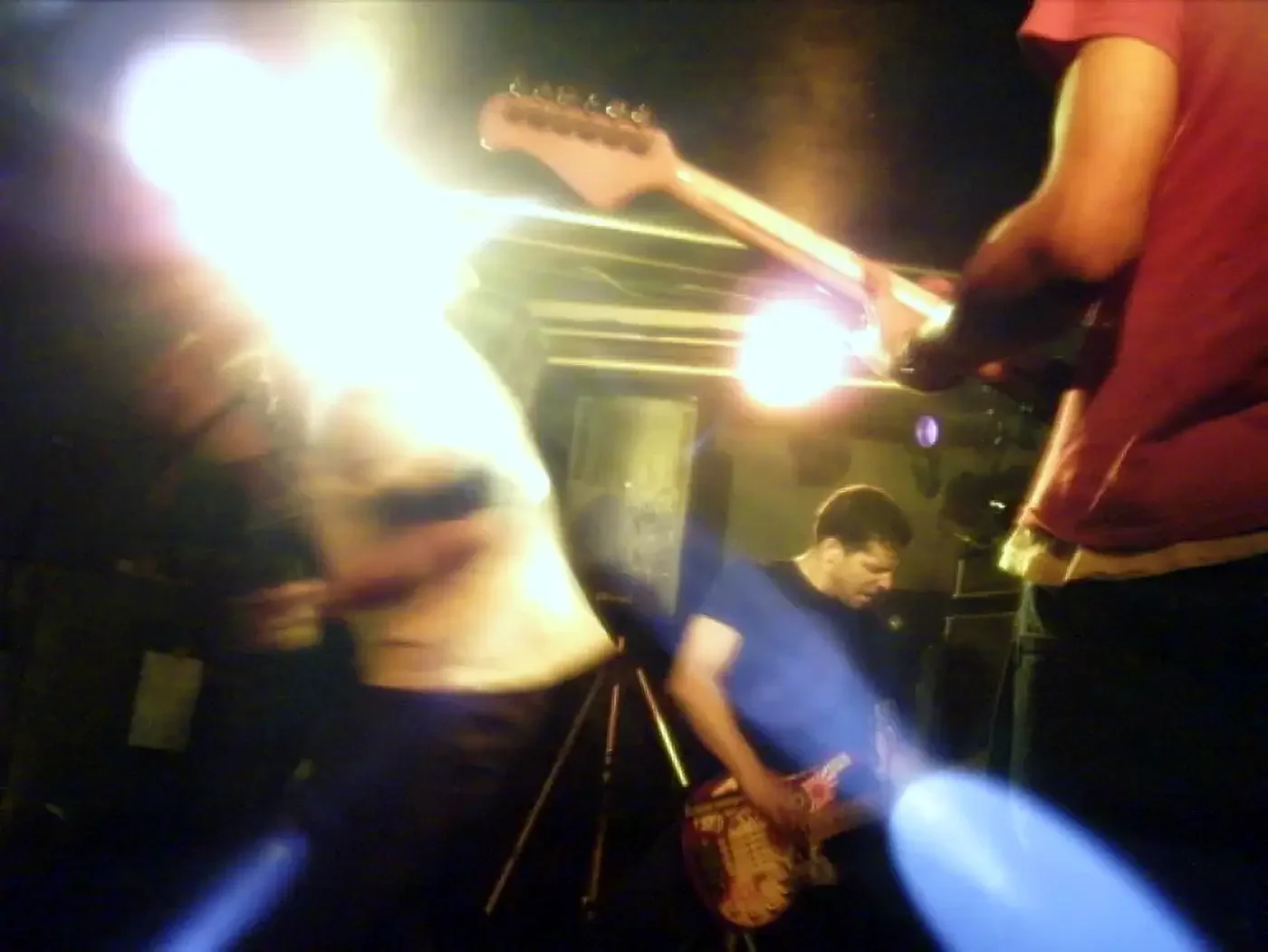
Before Worship Pain had a name, before restraint became an aesthetic choice, there was Black Line Fever. It was the first shared ground for the project’s lead guitar and bass, a formative space where motion mattered more than atmosphere and momentum was never optional. Rooted in post-hardcore, the band operated on sharp angles and forward strain, chasing propulsion rather than immersion. What emerged was not polish, but clarity through movement.
Black Line Fever wasn’t built to linger. The music moved quickly, fractured without collapsing, and demanded decisions in real time. It was an early project, but not a tentative one. The emphasis was always on how parts pushed forward, how sections collided and reassembled without losing their sense of direction. That instinct for motion, once learned, never disappeared.
Foundations in Motion
Inside Black Line Fever, the two learned how to navigate broken rhythms without losing their footing. Songs didn’t spiral inward or dissolve into texture. They advanced. Phrasing stayed aggressive and linear, even as structures splintered and reformed. The tension came from momentum, not density.
This approach forced precision. You couldn’t hide behind atmosphere or repetition. Each shift had to land. Each break had to mean something. The band’s sound insisted on movement as discipline, teaching its members how to maintain control while everything around them fractured. Those instincts later became foundational, long after the project itself had ended.
Physical Tension and Control
The defining pressure in Black Line Fever came from restraint under speed. Rapid changes were constant, but the core always held. Melody was allowed only when it carried the same strain as the rhythm beneath it. Nothing softened the impact.
This balance between aggression and control became a lasting method. The band learned how to create weight without slowing down, how to hold tension across short, sharp forms, and how to keep energy taut rather than explosive. These lessons remain audible years later, embedded in how Worship Pain shapes its internal dynamics.
Transition Toward Restraint
Black Line Fever eventually gave way to Funeral Sutra, where urgency collapsed into colder, more deliberate forms. Motion didn’t disappear, but it was reined in. Space became as important as impact. Repetition replaced fracture. Silence entered the structure.
That transition marked a turning point. The raw forward drive of the earlier project didn’t vanish. It went underground, reshaped into something more controlled. The line between the two bands is direct, and the tension between motion and restraint would later resurface as a defining characteristic of Worship Pain.
The Line Through to Worship Pain
Black Line Fever stands as the earliest current in this lineage. Its influence isn’t stylistic. It’s structural. The band taught its members how to direct force, how to maintain motion inside narrow frames, and how to make pressure feel intentional rather than chaotic.
Those lessons persist. Inside Worship Pain, they surface not as homage, but as method. Rhythm, form, and intent still carry the imprint of that first shared project, where movement was everything and control had to be earned at speed.