

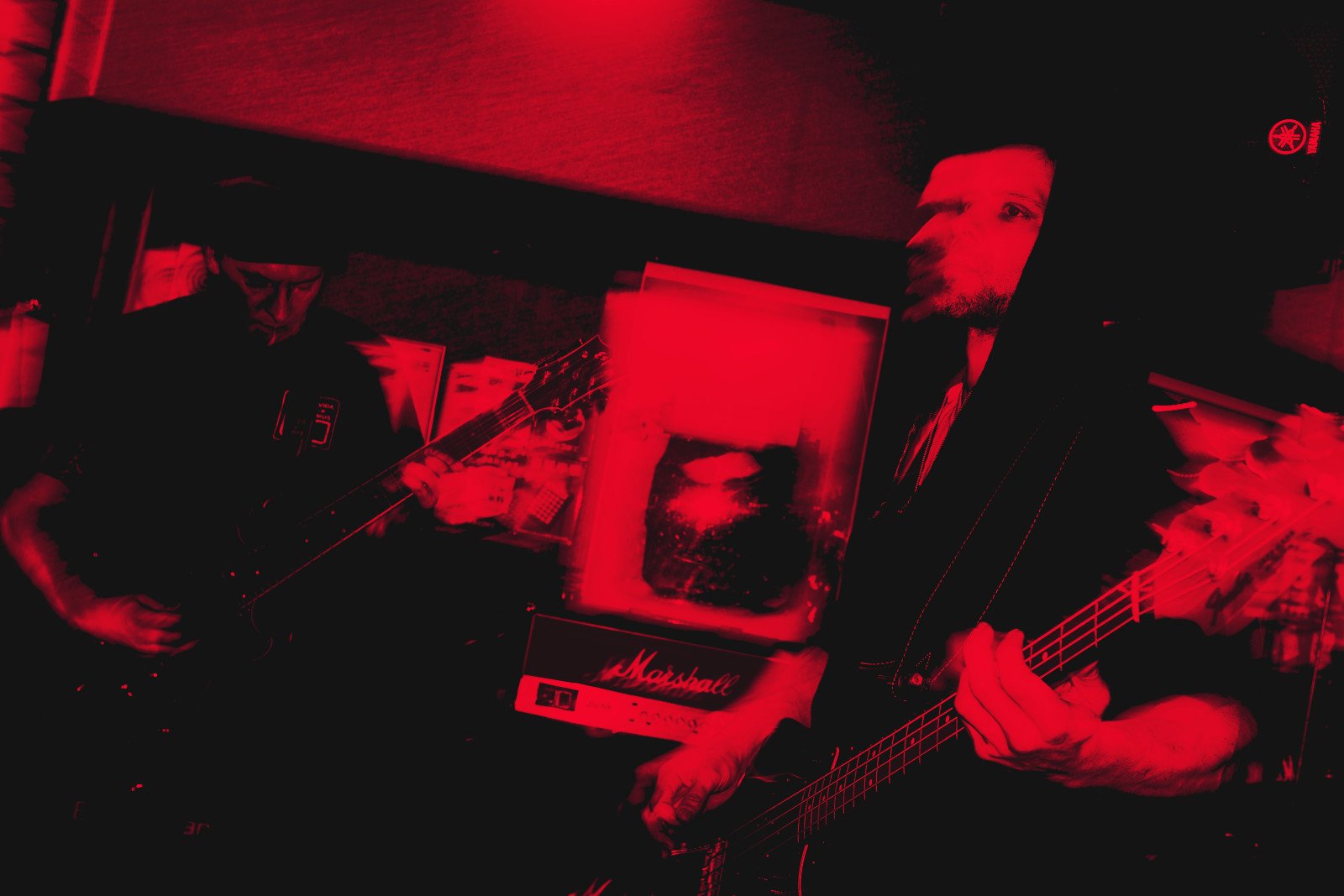
EQUIPMENT & SETUP
Worship Pain’s equipment is chosen for stability, repeatability, and durability under sustained use. The goal is not tonal variety or flexibility, but a setup that behaves predictably across rehearsal rooms, venues, and performance conditions.
This page documents how instruments, amplification, and supporting equipment are configured in practice. It focuses on reliability, failure avoidance, and how setup decisions support the material rather than shape it.
Core Principles
Equipment decisions are governed by restraint.
Every additional component introduces another potential point of failure or distraction. Setups are kept legible and reproducible so attention remains on execution rather than adjustment.
Gear is evaluated in context: long rehearsals, restricted volumes, inconsistent venues, and limited setup time.
Instruments
Instrument selection prioritizes consistency.
Tuning stability, output reliability, and physical durability matter more than tonal nuance. Controls are kept minimal to avoid accidental variation during performance. Pickup configurations are chosen to retain definition during extended passages without requiring constant adjustment.
Instruments are treated as tools, not expressive variables.
AMPLIFICATION
Amplification is selected for predictable behavior.
Amplifiers must respond consistently at controlled volumes and remain stable in reflective or untreated rooms. Headroom is favored over saturation to preserve structure under repetition. Gain levels are set to maintain density without collapse.
Adjustments between venues are kept minimal to avoid chasing room-specific sound.
PEDALS & PROCESSING
Effects are used conservatively.
Processing is introduced only when it reinforces structure or sustain. Time-based effects are limited to avoid obscuring repetition. Noise control is applied only where necessary to maintain stability rather than eliminate all artifacts.
Any component that demands constant attention is reconsidered.
CABLES & POWER
Supporting components are treated as critical.
Cables, power supplies, and connectors are standardized and regularly replaced. Signal paths are kept simple so faults can be identified quickly. These elements are considered consumables, not afterthoughts.
Failure planning is part of setup design.

Relationship to Sound & Method
Worship Pain’s equipment is chosen for stability, repeatability, and durability under sustained use. The goal is not tonal variety or flexibility, but a setup that behaves predictably across rehearsal rooms, venues, and performance conditions.
This page documents how instruments, amplification, and supporting equipment are configured in practice. It focuses on reliability, failure avoidance, and how setup decisions support the material rather than shape it.